
Ever sat through a fancy dinner with your boss, only to see a mouse dart across the floor and blurt out ネズミだ! — right there, in the most formal setting imaginable? Or maybe you’ve had a close friend brag about something and you fired back with a weirdly polite やったですね, dripping with sarcasm?
If either of these scenarios makes you go “wait, that breaks the rules,” then congratulations — you’ve just discovered the limits of the textbook explanation for だ vs です (da vs desu).
Most learners are taught one simple rule about だ vs です: “だ” is casual, “です” is polite. End of story. But native speakers break this “rule” all the time, in ways that seem to make no sense — until you learn the real secret behind these two little words.
In this article, Peggy is going to share a concept about だ vs です that completely changed the way she thinks about “だ” and “です” — something that goes far deeper than just politeness levels.
Prefer to watch? Check out the full video lesson below! 🎬
- The textbook rule: だ = casual, です = polite (and why it’s incomplete)
- The Personal Bubble Concept: inward vs. outward communication
- Real-world examples that finally make sense
- Conjugation cheat sheet (present, past, negative)
- The い-adjective exception you must know
- Using だ in compound sentences (advanced tip)
- Practice exercises to lock it in
Peggy
Pegiko
だ (da) vs です (desu) — The Textbook Rule (And Why It’s Not Enough)

Every beginner Japanese textbook gives you a neat, simple rule for the copula — the verb “to be”:
です (desu) = polite form / だ (da) = casual form
And honestly? This rule works great at first. You use “です” (desu) with your boss or someone you just met. You use “だ” (da) with your close friends. Polite here, casual there. Clean and simple.
1. ペギーは学生です。 (Peggy is a student. — polite)
⇒ “です” is used here because Peggy is speaking in a formal or polite context.
2. ペギコは学生だ。 (Pegiko is a student. — casual)
⇒ “だ” is used here because the speaker is in a casual context, like talking to a friend.
But here’s the problem. If you spend any time at all listening to native speakers, you’ll hear them “break” this rule constantly — in ways that seem to make absolutely no sense.
1-1. Two Confusing Real-World Scenarios
Scenario A — Sarcasm with です:
Your best friend brags about something. You reply: 良かったですね (yokatta desu ne — “Oh, good for you.”). You used the polite “です,” but you’re not being polite at all. You’re being sarcastic — using formal language to create cold distance with someone you’re close to.
Scenario B — Reflex with だ:
You’re at a fancy dinner with your boss. A mouse scurries across the floor. You shout: ネズミだ! (nezumi da! — “A mouse!”). You just used the casual “だ” right in front of your boss. But you weren’t being rude — it was a reflex.
Pegiko
Peggy
The Real Secret Behind だ (da) vs です (desu) — The Personal Bubble Concept

In fact, here is the key insight that changes everything. The real difference between “だ” and “です” isn’t about politeness levels. It’s about the direction of your message.
Are you talking to someone? Or are you just talking out loud?
2-1. Imagine Your Own Bubble
First, picture yourself standing inside your own personal space bubble. Then think about where your words are going:
だ (da) = inward expression (stays inside your bubble)
です (desu) = outward communication (reaches toward the listener)
| Aspect | だ (da) — Inward | です (desu) — Outward |
| Direction | Self-directed, stays in your bubble | Directed at the listener, leaves your bubble |
| Purpose | Express your own thoughts/feelings | Acknowledge social space, communicate outward |
| Interaction | Not meant for social exchange | Socially aware, aimed at someone |
| Examples | Surprises, exclamations, muttering | Conversations, polite speech, sarcasm |

Peggy
だ (da) vs です (desu) in Action — Real-World Examples That Make Sense
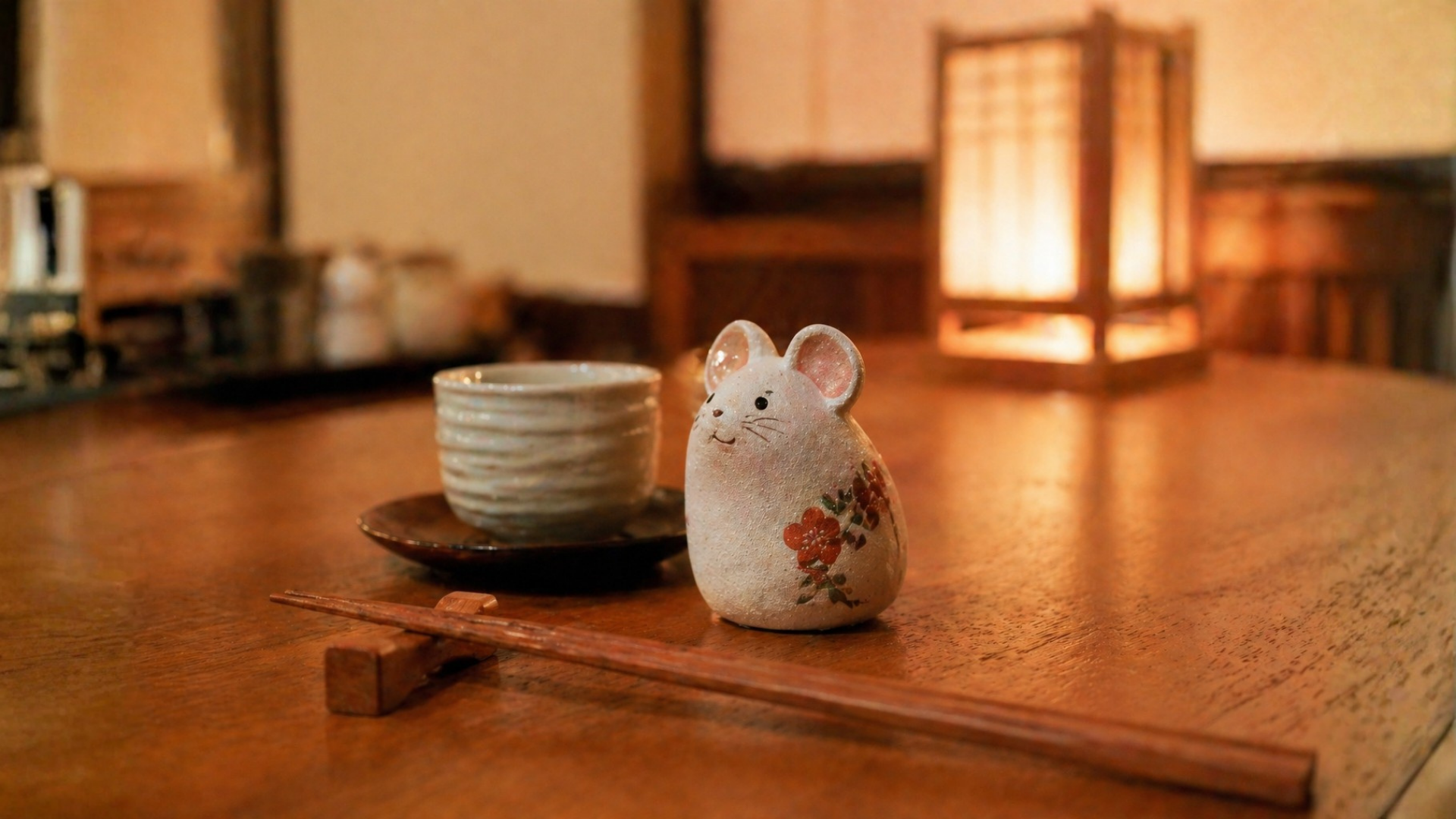
Now that we have the Personal Bubble Concept, let’s revisit those confusing scenarios. You’ll see they suddenly make perfect sense.
3-1. Why だ Comes Out as a Reflex
Remember shouting ネズミだ! (nezumi da!) at the restaurant? That was a sudden burst of surprise — a self-directed thought that just happened to fly out of your mouth. In other words, it wasn’t a message directed at your boss at all. It was simply an expression of your own shock — and as a result, it stayed “inside your bubble,” even though your boss could hear it.
In fact, the same logic applies to other forceful, one-way expressions:
1. 火だ! (hi da! — “Fire!”)
⇒ “火だ” — You’re not starting a polite conversation. You’re broadcasting an urgent fact to the world. Pure self-expression.
2. 嘘だ! (uso da! — “That’s a lie!”)
⇒ “嘘だ” — A confrontational outburst, not a social exchange. The speaker is focused on their own expression, not interaction.
3. ペギーはしまったと思った。失敗だ。 (Peggy thought “oops.” It was a mistake.)
⇒ “失敗だ” (shippai da) — Peggy is muttering to herself after making a mistake. A raw personal thought inside her bubble.
3-2. Why です Can Be Sarcastic
Now, what about that sarcastic 良かったですね (yokatta desu ne)?
“です” is the tool you use to acknowledge — and create — social distance. Normally with a close friend, there’s almost no distance. You’re basically in each other’s bubbles.
So by using the outward-directed “です,” you are artificially creating this huge, awkward gap between you. In short, that sudden coldness is the sarcasm.
4. ペギコ:「テスト100点だった!」
ペギー:「へえ、すごいですね。」 (Pegiko: “I got 100 on the test!” / Peggy: “Oh, how impressive.” — sarcastic)
⇒ “です” creates artificial distance. Peggy and Pegiko are close friends, so the formal tone feels cold and sarcastic.
5. 「あ、そうですか。」 (Oh, is that so? — cold/sarcastic)
⇒ “ですか” used between close friends can sound dismissive or sarcastic, because the formal distance feels intentional and unnatural.
Pegiko

Peggy
Conjugation Cheat Sheet

Now let’s get practical. Here are the essential conjugation forms you need to know.
| Tense | Casual (だ family) | Polite (です family) |
| Present | だ (da) | です (desu) |
| Past | だった (datta) | でした (deshita) |
| Negative | じゃない (ja nai) | じゃありません (ja arimasen) ではありません (dewa arimasen) |
| Past Negative | じゃなかった (ja nakatta) | じゃありませんでした (ja arimasen deshita) |
1. ペギーは先生です。 (Peggy is a teacher. — present, polite)
⇒ “です” — present tense, polite form. Used when speaking to someone in a formal context.
2. 昨日は日曜日だった。 (Yesterday was Sunday. — past, casual)
⇒ “だった” — past tense, casual form. An inner reflection or casual statement.
3. ペギコは学生じゃない。 (Pegiko is not a student. — negative, casual)
⇒ “じゃない” — negative, casual form. Common in everyday conversation between friends.
4. あれは猫じゃありませんでした。 (That wasn’t a cat. — past negative, polite)
⇒ “じゃありませんでした” — past negative, polite form. Used in formal explanations or polite conversation.
Pegiko

Peggy
The い-Adjective Exception — A Critical Rule

Now we need to talk about the single biggest exception to everything above: い-adjectives (i-adjectives).
You CANNOT attach だ to an い-adjective.
Why? Because an “い-adjective” like “大きい” (おおきい / ookii — “big”) already contains the meaning of “is” within itself. In other words, adding “だ” would be like saying “is big is” — completely redundant.
Pegiko

Peggy
Japanese い-adjectives are pretty self-reliant, honestly. They don’t need anyone’s help to express “is.”
Advanced Tip: だ in Compound Sentences

Additionally, here’s one more advanced but very real-world situation. When you make a longer compound sentence, you’ll often see “だ” used in the middle, even if the sentence ends politely.
1. ペギーは先生だけど、フランス語も話せます。 (Peggy is a teacher, but she can also speak French. — polite ending)
⇒ “だ” appears in the middle as a connector, but the sentence ends with the polite “ます” (masu). The formality of the entire sentence is decided by the final verb.
2. 今日は休みだから、映画を見に行きます。 (Today is a day off, so I’m going to see a movie. — polite ending)
⇒ “だ” connects the reason clause. The polite “ます” at the end sets the overall tone of the sentence.
Peggy
だ (da) vs です (desu) Summary — Inward vs. Outward

If you remember just one thing from this entire article, let it be this:
Stop thinking casual vs. polite.
Start thinking inward vs. outward.
- だ (da) — Self-expression. Your thoughts, reactions, realizations. Stays inside your personal bubble.
- です (desu) — Social communication. Reaches out to the listener, acknowledges the social space between you.
- い-adjectives — Never attach “だ.” The adjective already contains “is.” Use “です” only as a politeness marker.
- Compound sentences — “だ” in the middle is just a connector. The final verb decides the formality.
Pegiko
Peggy
→ The Topic Particle は (wa)
→ The Subject Particle が (ga)
Practice Exercises
Now, it’s time to put your だ vs です understanding to the test! For each situation, choose whether the speaker would naturally use “だ” or “です” — and think about why.
7-1. Questions
Q1. You stub your toe alone at home and mutter: 痛い ___ ! (Ouch! That hurts!)
a) だ b) です c) Neither (い-adjective)
Q2. You’re explaining to a coworker: これは会議室 ___ 。 (This is the meeting room.)
a) だ b) です
Q3. You look out the window, and to no one in particular: 雨 ___ 。 (It’s raining.)
a) だ b) です
Q4. A close friend shows off a new haircut. You respond coldly: 素敵 ___ ね。 (How lovely.)
a) だ b) です
Q5. You see a celebrity on the street and gasp to yourself: 本物 ___ ! (The real deal!)
a) だ b) です
7-2. Answers & Explanations
A1. c) Neither.
⇒ “痛い” (いたい / itai) is an い-adjective. It already contains the meaning of “is,” so you say “痛い!” on its own. No “だ” or “です” needed in casual speech.
A2. b) です
⇒ You’re directing your statement at a coworker — this is outward communication. “これは会議室です” (kore wa kaigishitsu desu).
A3. a) だ
⇒ You’re muttering to yourself while looking out the window. A self-directed thought inside your bubble. “雨だ” (ame da).
A4. b) です
⇒ By using the outward-directed “です” with a close friend, you create artificial distance — just like the sarcastic “良かったですね” example. “素敵ですね” (suteki desu ne) said coldly to a close friend is the sarcasm in action.
A5. a) だ
⇒ A gasp of realization to yourself. Self-directed, stays inside your bubble. “本物だ” (honmono da)!
Pegiko & Peggy
Prefer to watch and listen? Here’s the full video lesson on YouTube! 🎬